Home / What we buy / Gold jewelry and scrap
Selling gold jewelry, scrap and placer gold in Phoenix
Broken chains, old rings, gold watches, dental gold and the vial of flakes from a trip to Lynx Creek. Sorted, tested and weighed where you can see it.
Gold we buy
- Chains, bracelets and necklaces in any karat
- Rings, wedding bands and old settings
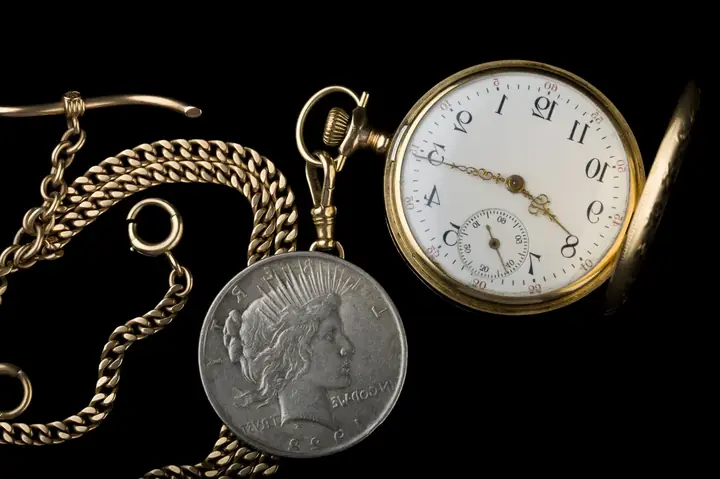
- Gold watches and watch cases
- Dental gold
- Arizona placer gold, flakes and nuggets
- Gold nugget jewelry
- Broken and single pieces
How gold is priced
We sort jewelry by karat, test anything unmarked, weigh each group in grams and work out its pure gold. The offer is a set share of that gold at the live price. The share is printed on the sheet.
Placer gold is tested lot by lot because its purity depends on where it was found. Most Arizona placer gold runs well above 80 percent gold, with silver making up most of the rest.
Gold from Valley jewelry boxes
Valley jewelry boxes hold a lot of gold from somewhere else: a ring from a marriage in Illinois, chains bought on a cruise, a father's retirement watch from forty years at a plant back east. They also hold Arizona gold, like nugget pendants bought in Prescott or Wickenburg and flakes panned on a weekend trip.
Every piece is bought on the gold it contains. Nothing needs to be repaired or cleaned first.
Arizona placer gold
Prospectors have worked Arizona creeks since the 1860s. Lynx Creek and the Hassayampa near Prescott, the desert placers around Quartzsite and the old diggings near Wickenburg still draw weekend panners, and many Valley families have a vial or two of flakes from those trips.
We pour off any water, dry the gold, separate out black sand and weigh what is left. Then we test the purity, because placer gold varies from one deposit to the next. Larger natural nuggets with good shape can carry a premium over their gold content.
Reading karat marks
American jewelry is usually stamped 10K, 14K or 18K. European pieces often use numbers: 417 for 10 karat, 585 for 14 karat and 750 for 18 karat. Mexican jewelry may be stamped 10K or 14K, or carry no mark at all.
Stamps get read, and any piece without a clear one gets tested. Put simply, 10K is a bit over 40 percent gold, 14K close to 60 percent and 18K three quarters gold.
What happens at a gold appointment
We sort your gold on a tray in front of you, group it by karat, test what needs testing and weigh each group on a scale you can read. Next comes the live gold price and the math, on paper.
A typical gold sale wraps up in under half an hour. Accept and the money changes hands right there. Need time? The sheet goes home with you.
Jewelry that might be worth more
Signed pieces, antique jewelry and rings with large stones can be worth more to a jewelry buyer than to a refiner. We look for those before anything goes on the scale and tell you if a piece should go elsewhere.
Gold watches and retirement gifts
Many Valley retirees spent careers at companies that handed out gold watches, rings or pins after twenty or thirty years of service. Solid gold watch cases are usually 14K, but many watches have gold-filled cases with very little gold. We test each one.
A few watches are worth more as collectible watches than as gold. If yours might be one of them, we say so before weighing it.
Dental gold
Dental crowns and bridges are often high karat gold alloys with some platinum or palladium. They sell on their tested gold content. Bring them in any container; we clean off any tooth material and test what remains.
GuideHow to sell coins safelyRequest a free offer
We call back the same day to set a private appointment.
FAQ
Frequently asked
Do you buy placer gold?
Yes. We dry it, weigh it and test its purity before pricing.
Do you buy broken gold?
Yes. Broken chains and single earrings sell on their gold weight.
Can I keep the diamond?
Yes. We can weigh the setting after the stone is out, or subtract an estimate for it.