Home / What we buy / Silver, sterling and Native American silver
Selling silver, sterling and Native American silver in Phoenix
Rolls of old silver coins, sterling flatware and turquoise and silver jewelry. Everything weighed and priced on the live market, with older and signed jewelry flagged first.
Silver we buy
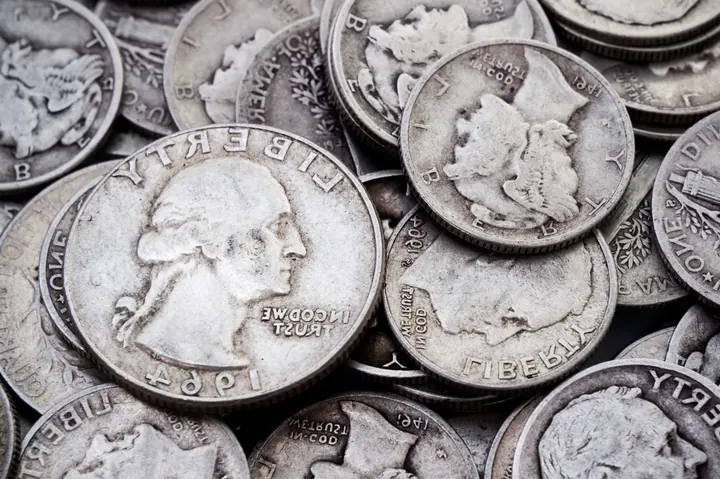
- Dimes, quarters and halves from 1964 and earlier
- Kennedy halves from 1965 to 1970
- Sterling flatware and serving pieces
- Navajo, Zuni and Hopi silver jewelry
- Squash blossom necklaces and concho belts
- Silver jewelry stamped 925 or Sterling
- Mexican silver jewelry from Taxco
How silver is priced
Silver coins sell on their silver content. Every dollar of face value in pre-1965 U.S. silver coins works out to roughly 0.715 troy ounces of silver. Sterling is 92.5 percent silver and sells by weight after we take out anything that is not silver.
Turquoise and other stones are not silver, so we estimate and subtract their weight. Signed and older pieces can be worth more as jewelry, and we tell you before pricing them as metal.
Silver in Arizona homes
Turquoise and silver are part of Arizona life. Families bought squash blossoms and cuffs at trading posts on road trips, collected Zuni inlay for decades or inherited a drawer of old pawn from a grandparent who lived on the reservation border.
That jewelry deserves a careful look before anything goes on the scale. Sterling flatware and silver coins turn up in nearly every estate too, and we price all of it at one appointment.
Old pawn and newer pieces
Old pawn refers to jewelry pawned at reservation trading posts and never redeemed. True old pawn from the early and middle 1900s, with heavy hand-stamped silver and natural turquoise, is popular with collectors.
Newer pieces made for the tourist trade are usually lighter, and some are plated. We test every piece and tell you which ones are sterling, which carry collector appeal and which are plated or nickel silver.
Mexican silver jewelry
Taxco, a silver town in central Mexico, has turned out silver jewelry for nearly a century. Pieces are often stamped 925, Taxco, or with an eagle mark and maker code on older work. Signed vintage Taxco pieces can be worth more as jewelry. Most newer pieces sell by weight.
Sterling flatware
Sterling flatware sells by weight after we take out stainless knife blades and other parts that are not silver. Hollow-handle knives have cement inside, so we estimate the silver in each. A few popular patterns may sell better as a set, and we will mention it if yours is one.
Silver coins
U.S. dimes, quarters and halves dated up to and including 1964 contain 90 percent silver. Kennedy halves from 1965 to 1970 are 40 percent. War nickels from 1942 to 1945 are 35 percent. We weigh each group and look for better dates before pricing anything as silver.
Concho belts and squash blossoms
Large pieces like concho belts and squash blossom necklaces can hold a lot of silver. A heavy belt might weigh more than a pound. They can also be worth well beyond their metal when they are older, signed or set with fine turquoise.
We weigh them, estimate the stones, price the silver and then tell you whether we think a collector would pay more. You decide from there.
What a silver appointment looks like
Coins, flatware and jewelry are sorted into separate groups on the table. We check the marks on each piece and test any that are unclear. Each group goes on the scale, the live silver price comes up and the math is done in front of you.
GuideSelling Native American silver jewelryRequest a free offer
We call back the same day to set a private appointment.
FAQ
Frequently asked
Do you buy turquoise jewelry?
Yes. We price the silver and tell you if a piece looks like it is worth more to a jewelry collector.
Do you buy silver-plated flatware?
Plated pieces hold very little silver. We test anything unclear and tell you.
Do you buy 40 percent halves?
Yes. Kennedy halves struck from 1965 through 1970 are 40 percent silver.